
The trade deadline has passed, and it is time for the Washington Nationals to start looking toward the future. As of writing, their playoff odds stand at a measly 2.2%, according to FanGraphs. On the hitting side, Curtis Mead and Luis García Jr. now wear different uniforms, and James Wood is on the injured list with a mild oblique strain. On the pitching side, Foster Griffin was traded away and Zack Littell was designated for assignment. Over the final two months of the season, the Nationals have a chance to evaluate prospects who have spent the season in the minor leagues as well as new faces to the organization. There are seven pitchers and five hitters whom I have identified as potential contributors to this Nationals team. Of the seven pitchers, five are relievers and could be given an opportunity in what has been a historically bad bullpen. Should they, or any of the other notable players, perform well, they may give themselves an opportunity to be a part of the next contending Nationals team.
The Pitchers
RHSP Luis Perales
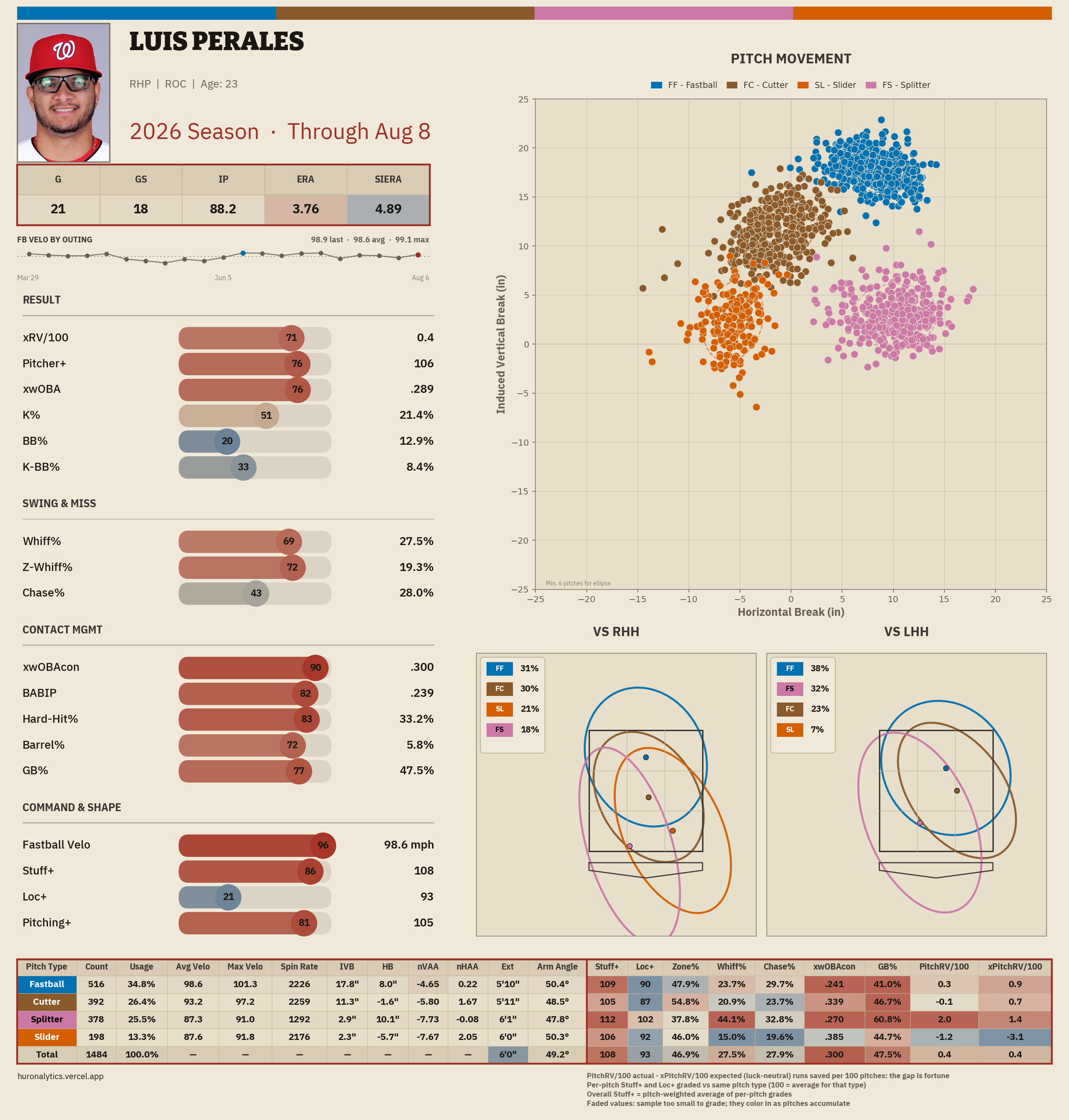
It is not hard to see why the Nats traded for Luis Perales. They traded a more polished starting pitcher in lefty Jake Bennett (96 Stuff+ in 2026) to the Red Sox to chase the upside (108 Stuff+) of a starting pitcher whose fastball sits in the upper-90s and can touch 101. However, his best pitch has turned out to be one that he has only started throwing with more frequency recently. Over his first 11 outings, Perales threw his splitter 14% of the time, which was the lowest usage of any pitch. His strikeout rate sat at 18%, his whiff rate was average, and his chase rate was below average. Over his last 10 outings, his splitter usage has risen by over 20 percentage points, as he is now throwing the pitch 35% of the time, most of any of his pitches. The splitter generates whiffs on 44% of swings against it, and when it does get put in play, over 60% of batted balls are on the ground, leading to a .270 xwOBAcon. Since he increased its usage, his strikeout rate has jumped to 24%, both his whiff and chase rates have increased five percentage points, and his xwOBAcon has dropped .032 points. While his ERA has increased over this timeframe, his SIERA, which is a better indicator of true skill, has dropped by almost a full run.
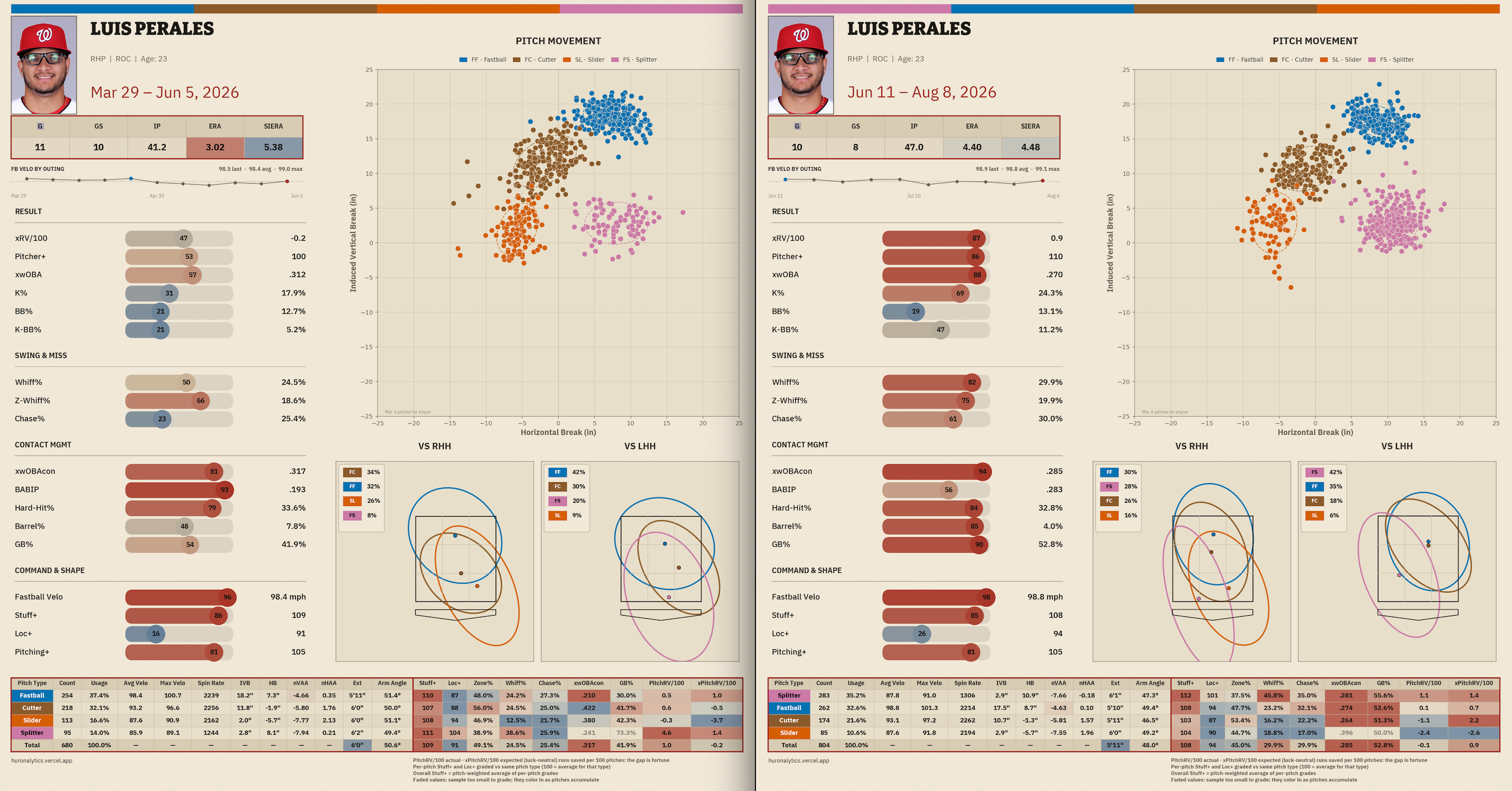
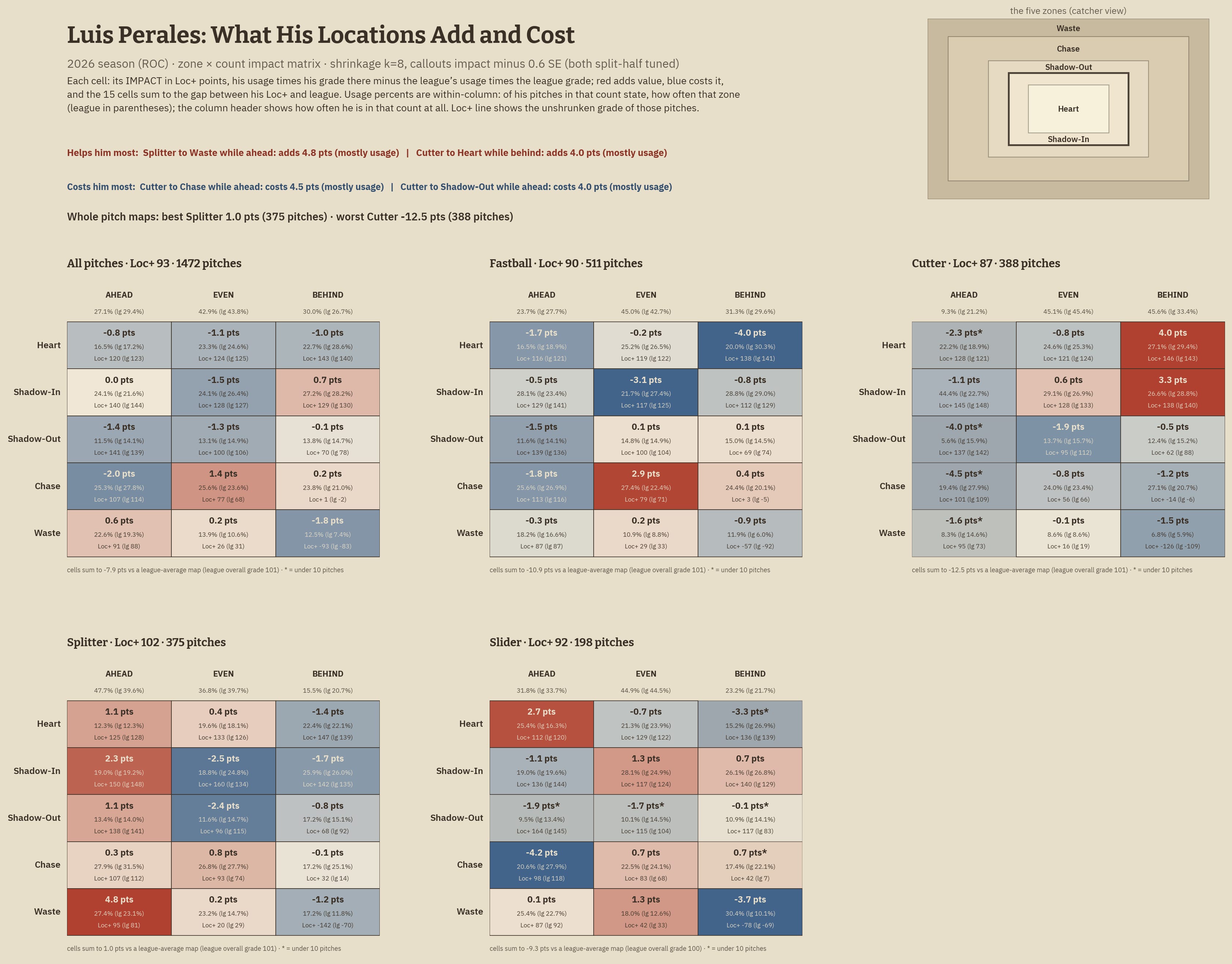
What holds Perales back is his average strikeout rate combined with his 13% walk rate. Fellow Red Wing Riley Cornelio has walked 12% of the AAA hitters he has faced this season, but he has also struck out 36% of them, making the walks less impactful. Perales suffers from below-average locations on everything but his splitter. He actually is in-zone at about a league-average rate, but his misses are too often uncompetitive, with 16% of his pitches being thrown in waste zones compared to the league average of 12%. As of now, his profile carries legitimate reliever risk, but if he can continue to generate whiffs with his new splitter-heavy approach while simultaneously cutting down on his walk rate, there is front-end starter potential to dream on.
LHSP Jackson Kent
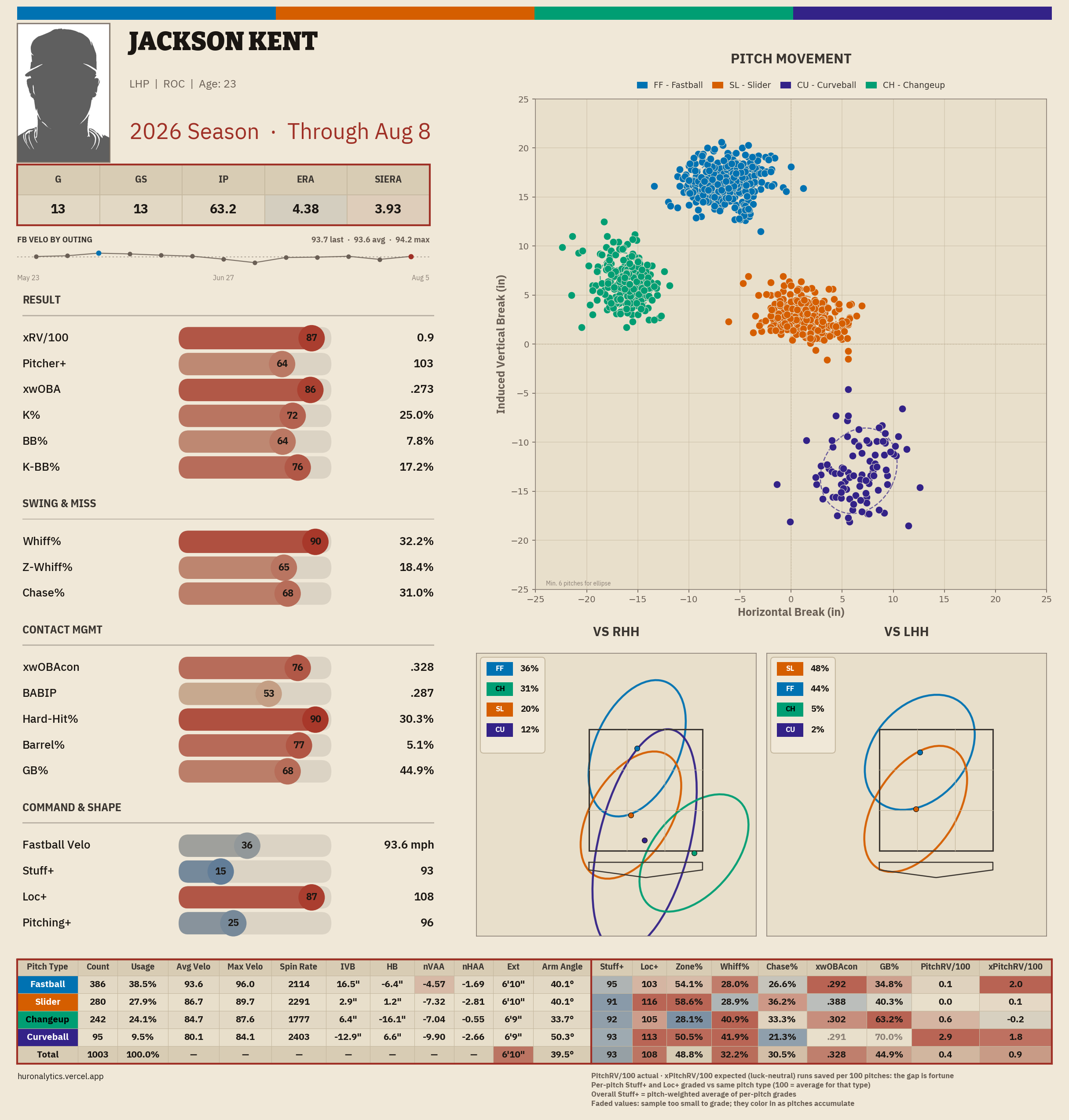
Jackson Kent is currently the inverse of Perales: 93 Stuff+ and 108 Loc+. While he does not overwhelm hitters with elite stuff, he locates exceptionally well. He has above-average extension at almost seven feet which helps his velocity play up a bit higher than what the radar gun reads. Through 13 starts, he has generated whiffs at a very high rate (32%) while suppressing damage when balls are put in play against him (5% barrel rate). He has different approaches based on hitter handedness, as he mixes in all four pitches against righties while attacking with mainly his slider and fastball against lefties. I would like to see him mix in his changeup to lefties more, as he has good feel for it and it would help him cover the inner third and set up his slider.
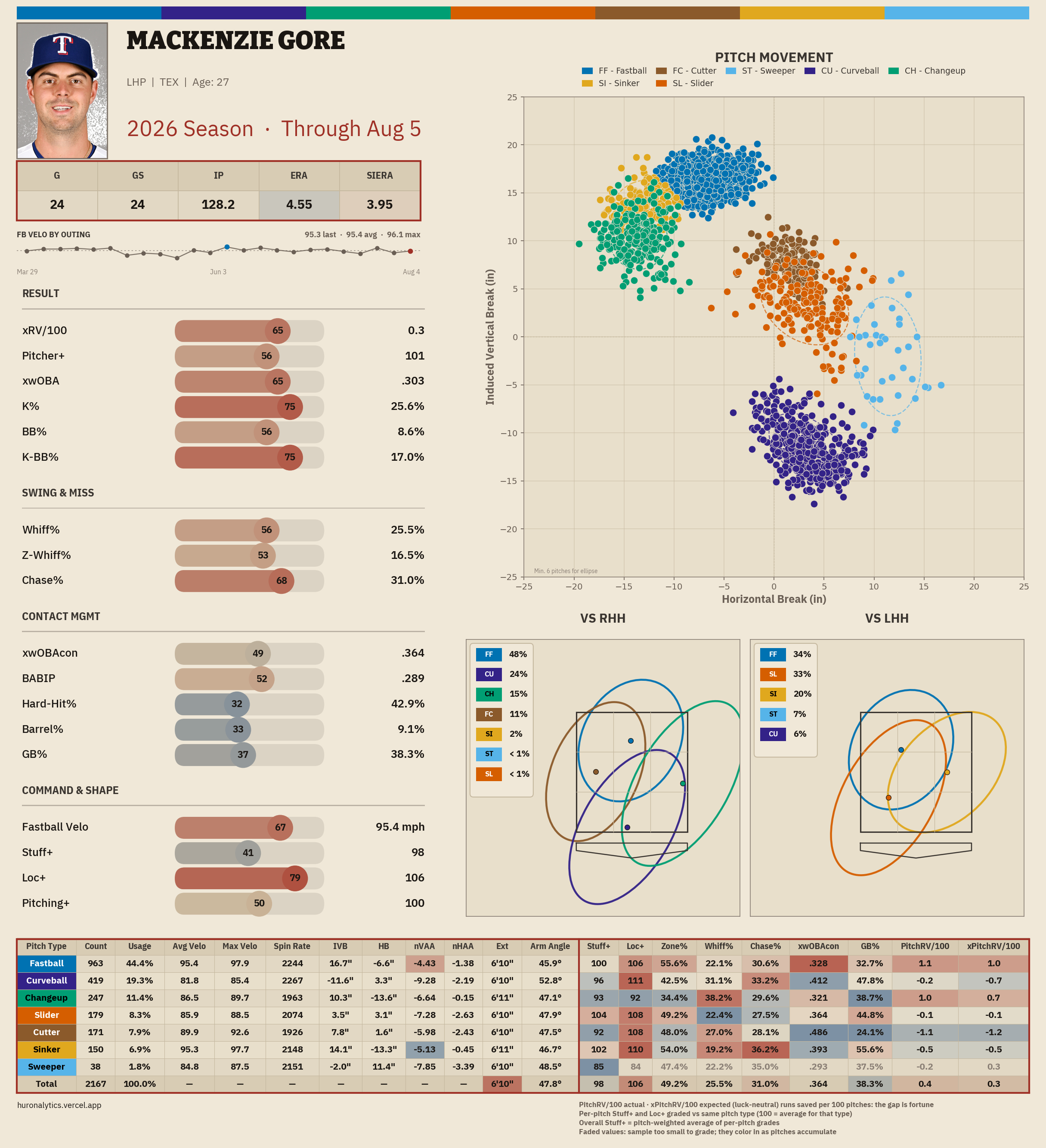
An interesting comp for Kent is former National MacKenzie Gore. Gore is another lefty who has average stuff but above-average locations. Gore’s arsenal is larger than Kent’s, as he also throws a cutter, sinker, and sweeper, but the main four pitches share similar movement profiles. Kent misses more bats at AAA than Gore does in MLB, but that gap will likely compress when he is in the big leagues. Kent currently projects as a back-end starter, but if he can find a tick or two more of velocity, his projection increases.
LHRP Erik Tolman
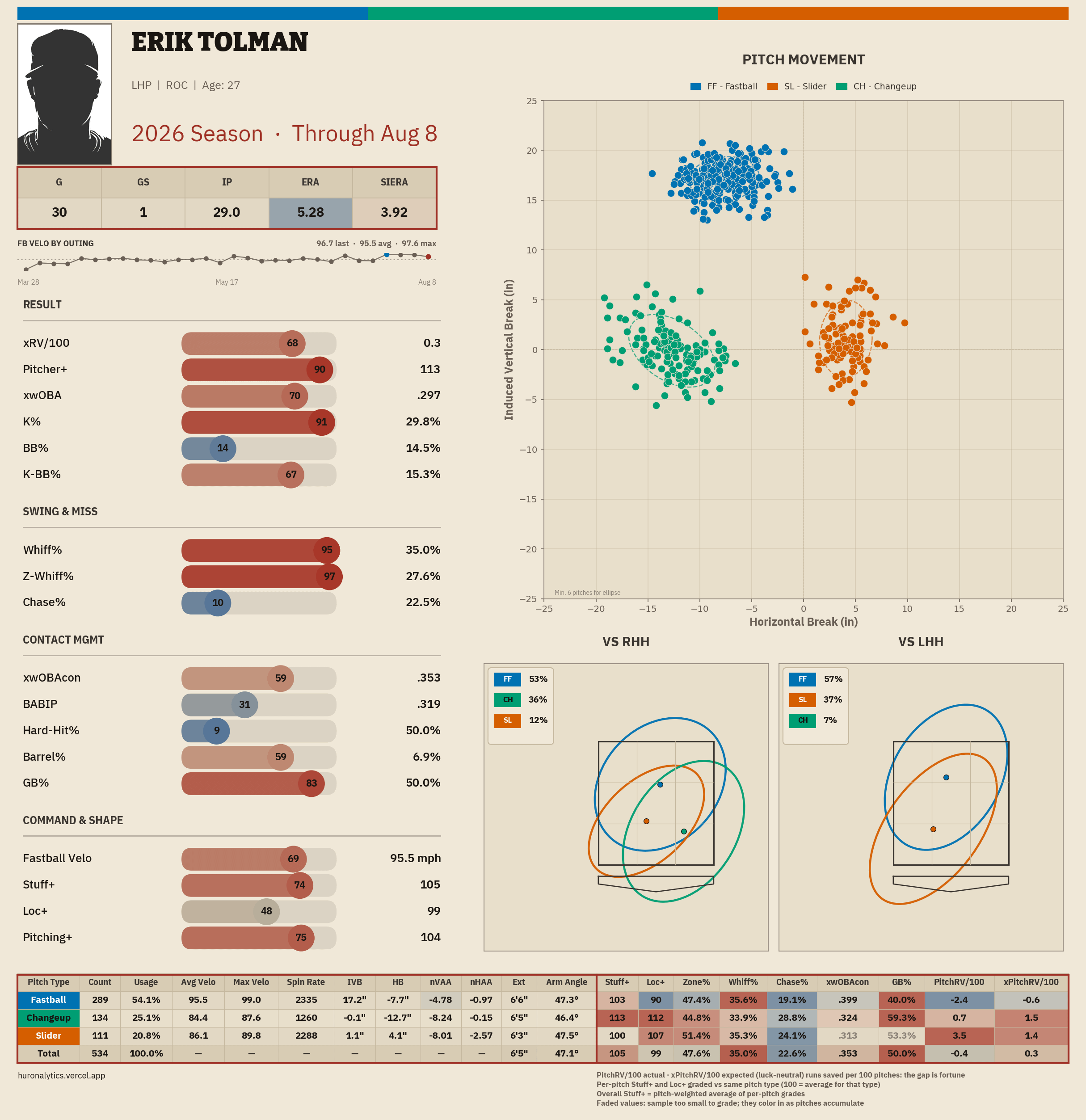
The fact that Erik Tolman is this close to the big leagues is a testament to his perseverance. Not only has he had Tommy John surgery twice, he also blew out his right knee in a freak accident in 2024, tearing his ACL, PCL, LCL, and hamstring. In 2026, he is missing bats at an elite level in Rochester, with a Z-Whiff rate of 28% (97th percentile). His changeup grades out as his best pitch: 113 Stuff+, 112 Loc+, 59% ground ball rate. He throws it 11 mph slower than his fastball while making it drop eight inches more than one would expect given his arm angle.
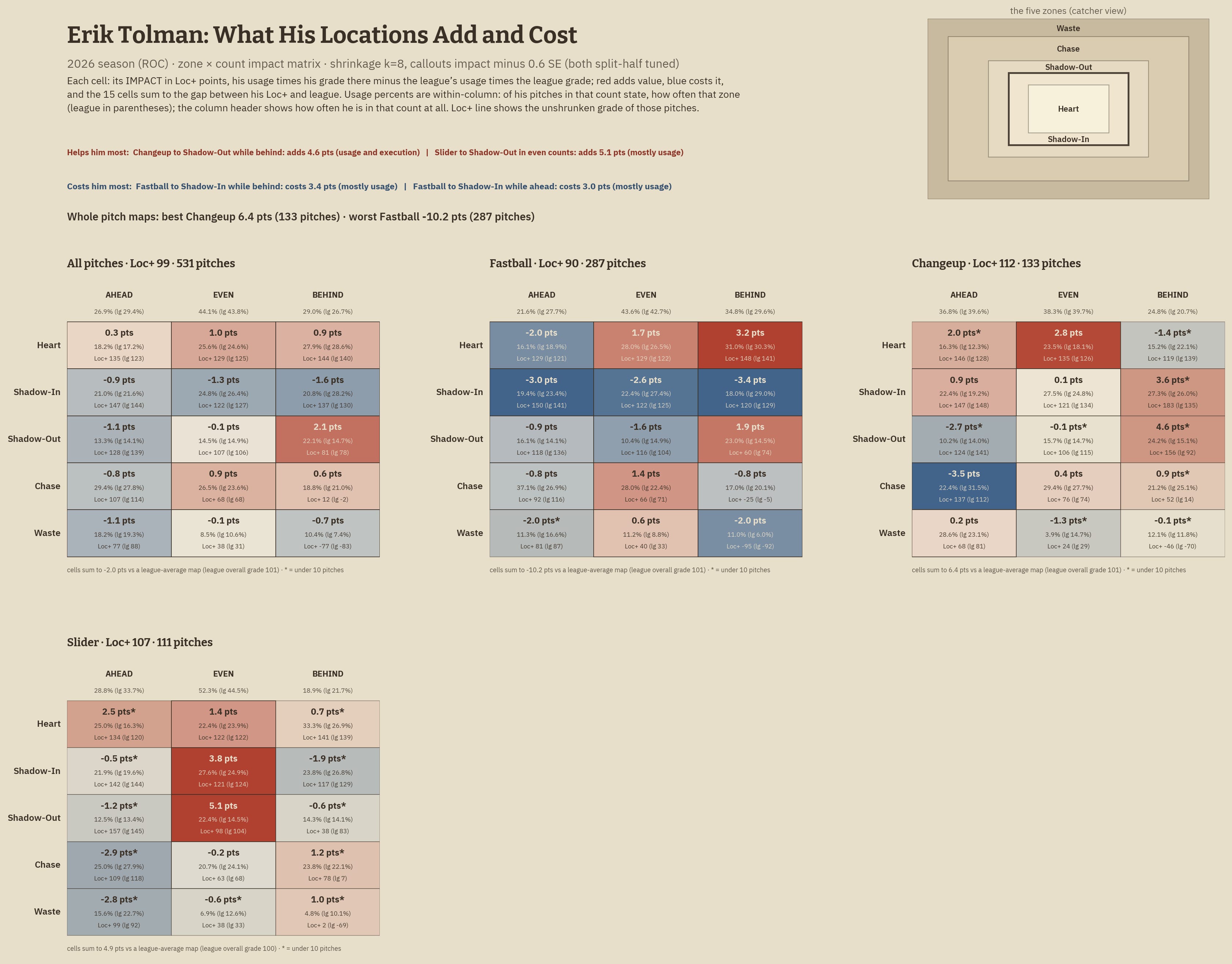
I believe Tolman would be in the big leagues already if he could find a way to limit his walks, especially against left-handed hitters. Considering he is supposed to have the platoon advantage against them, he has walked an unfathomable 22% of lefties faced. His fastball command holds back the rest of the profile: he throws it in the “shadow-in” parts of the zone at a below league-average rate regardless of count, which limits how effective his changeup and slider are, as he throws those at the bottom edge in the counts that matter. Tolman has the stuff to be a medium-to-high leverage arm if he improves his fastball command.
RHRP Jack Sinclair
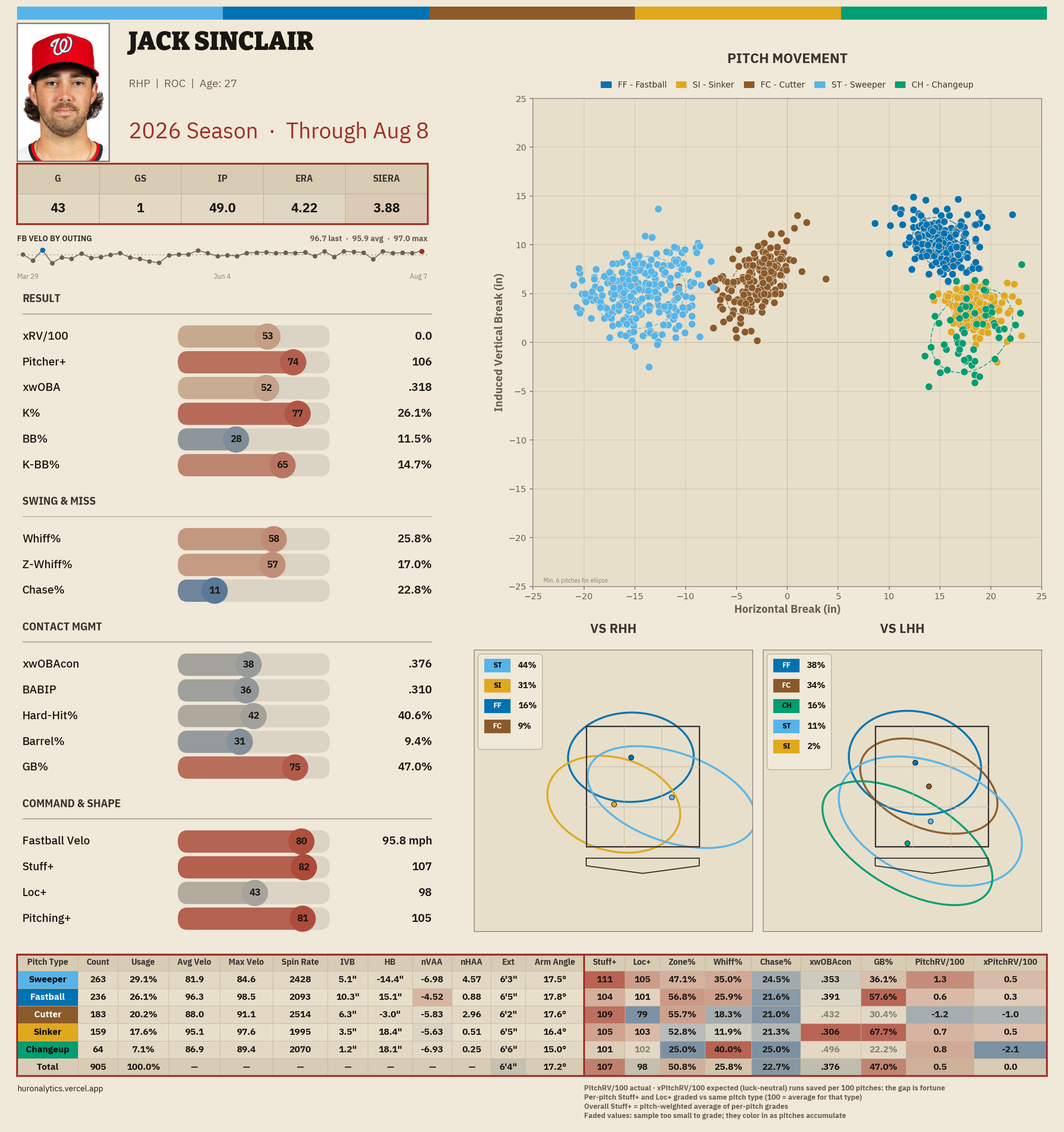
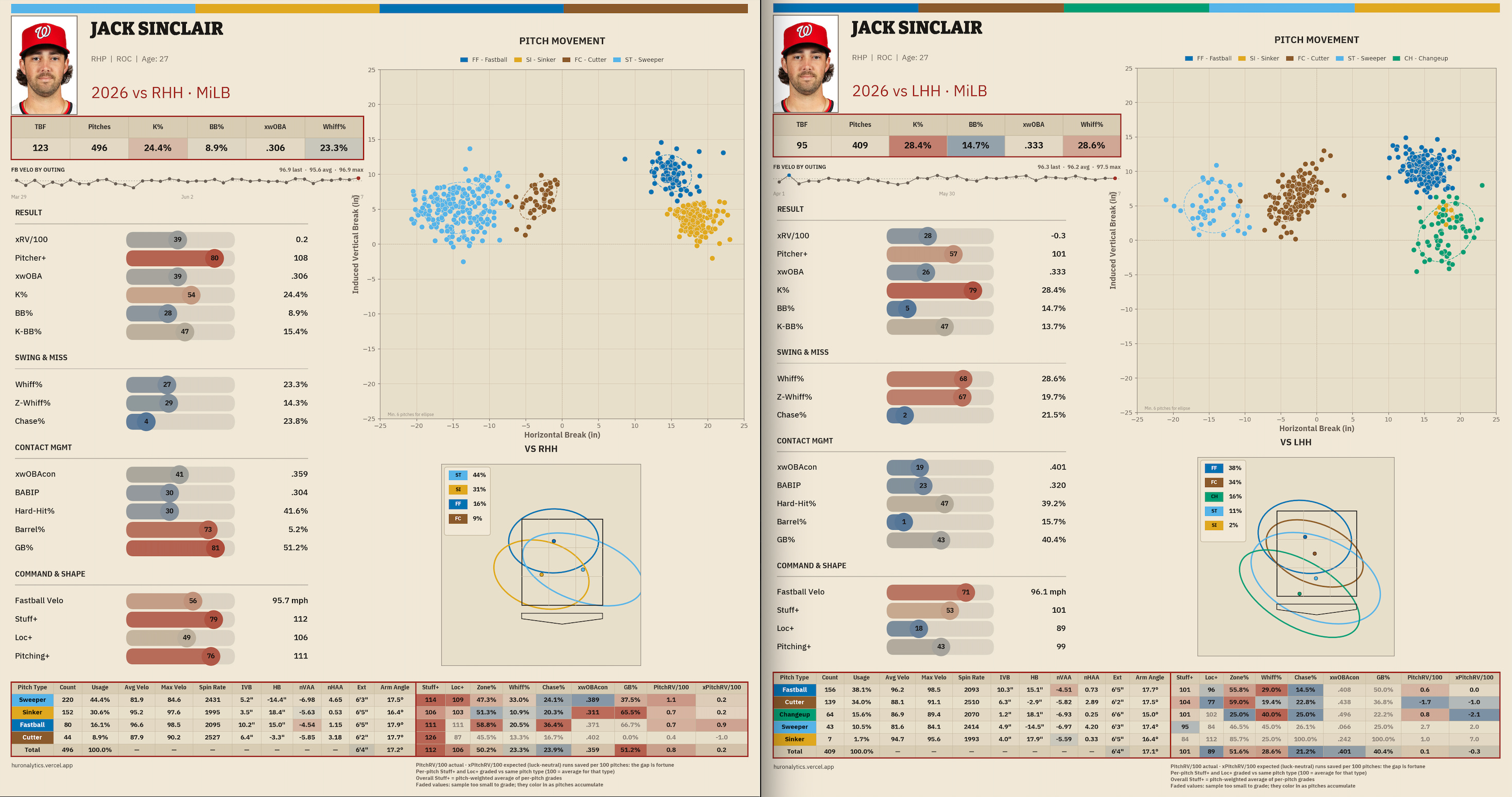
Jack Sinclair sits 96 from a low slot with a plus sweeper (111 Stuff+, 105 Loc+). In terms of whiffs, he has actually been much more effective against left-handed hitters, as his fastball (29%) and changeup (40%) generate whiffs against lefties at an above-average rate. While he has struck out 28% of the lefties he has faced, he has also walked 15% of them, and when the ball is put in play, he has been crushed, with 16% of batted balls being barrels. Against righties, the strikeouts are down (24%), but so are the walks (9%) and barrels (5%), as he opts for a sweeper-sinker combination instead of the fastball-cutter-changeup trio he prefers against lefties. Sinclair looks like a low-to-medium leverage reliever at the moment, although his five-pitch mix does lead one to believe he could be stretched out as a starter. The pitch that could decide his future is his cutter, which grades as a strong offering by stuff (109 Stuff+) but is often thrown in poor locations (79 Loc+). Against lefties it has been the source of much of his damage allowed.
LHRP Will Dion
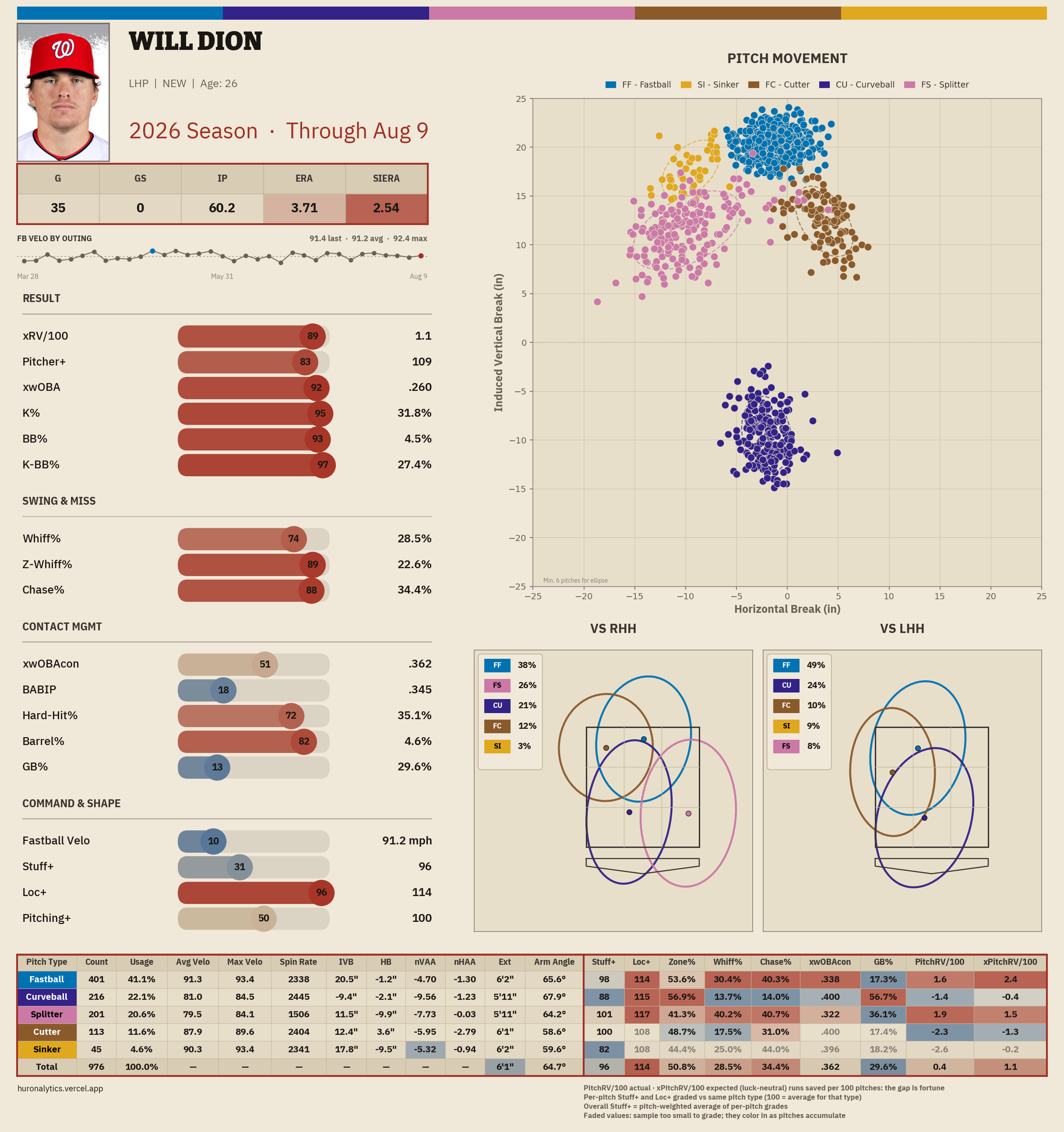
Will Dion, one of the four players acquired from Cleveland in the Foster Griffin trade, generates whiffs (29%) and strikeouts (32%) at a high rate despite having a fastball that sits 91 and tops out at 93. What immediately stands out about Dion is his release point. With an average arm angle of 65°, Dion throws from a slot similar to that of Toronto’s Trey Yesavage. His fastball has an extreme cut-ride profile, playing well at and above the top of the zone. He works his splitter off of his fastball extremely well, and both pitches have hitters whiffing and chasing at above-average rates. What pulls everything together is his ability to locate (114 Loc+, 96th percentile) and limit walks (4%, 93rd percentile).
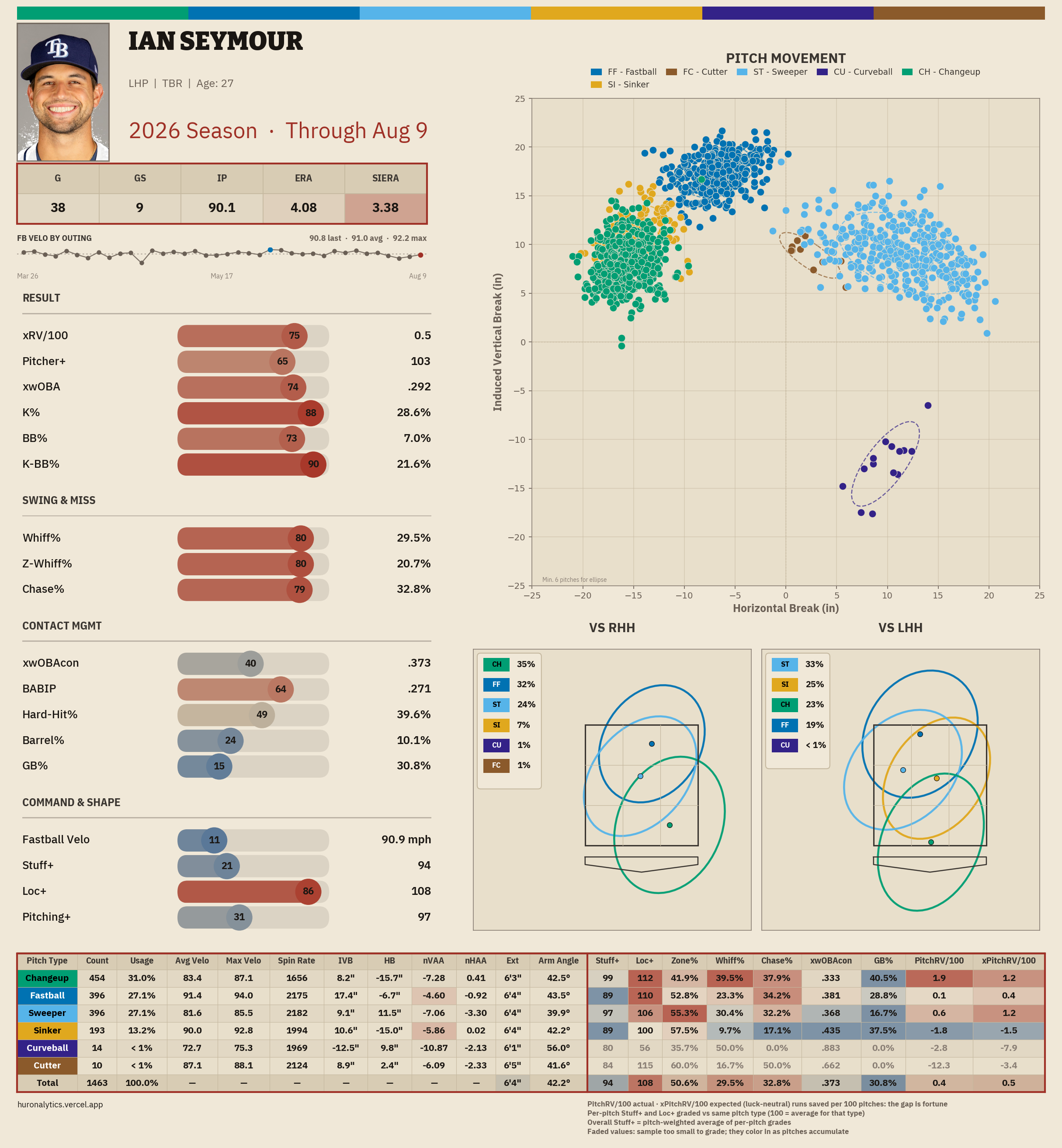
The main worry with Dion is his low ground ball rate. He carries an extreme fly ball profile, which combined with his lack of velocity, could lead to an inflated home run rate in the big leagues. An interesting comp for Dion is Tampa Bay’s Ian Seymour, another lefty with below-average stuff but above-average locations who features a changeup as his putaway pitch. Seymour is having some success in the big leagues with this formula, which is proof of concept.
RHRP Yovanny Cruz
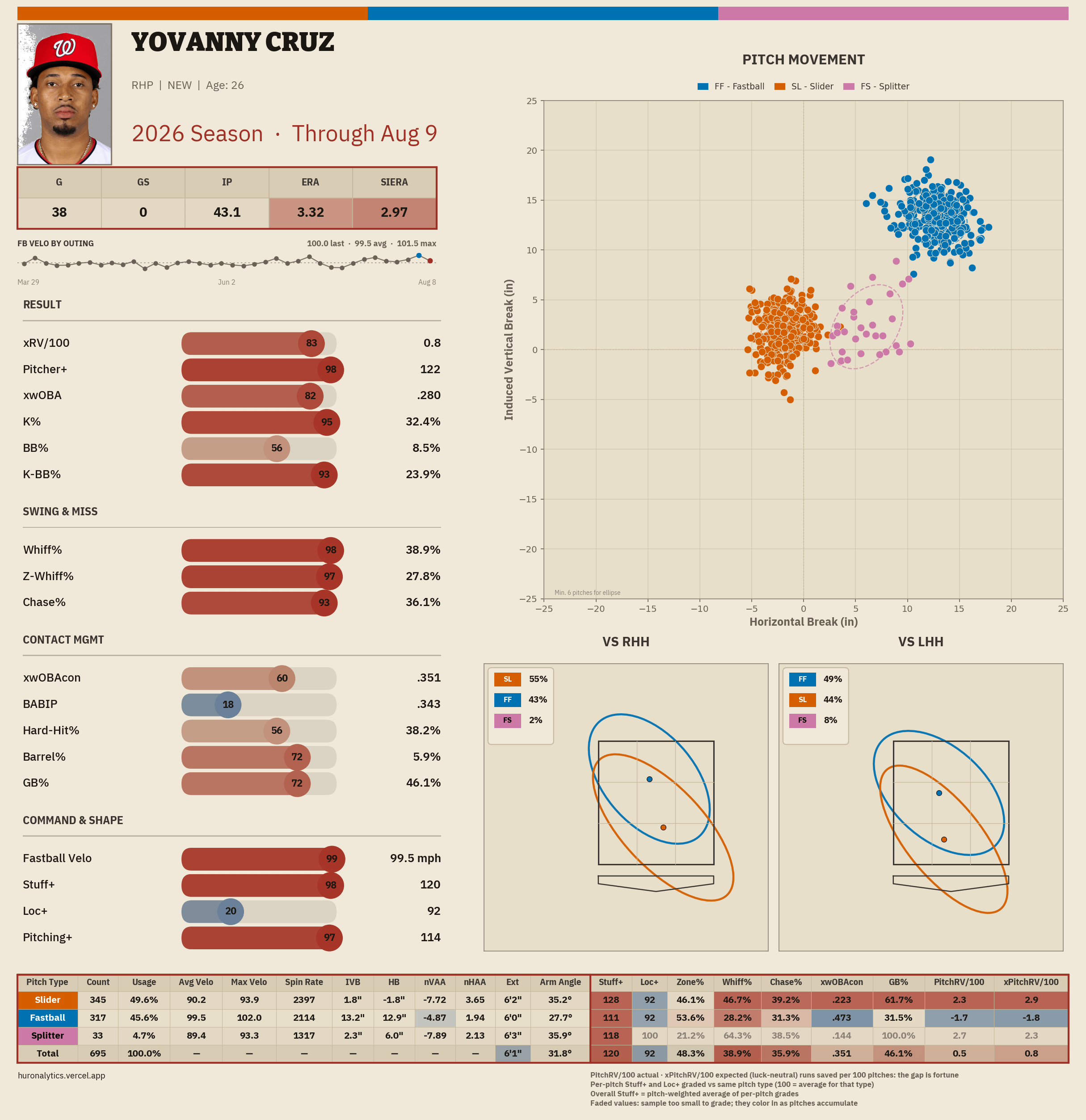
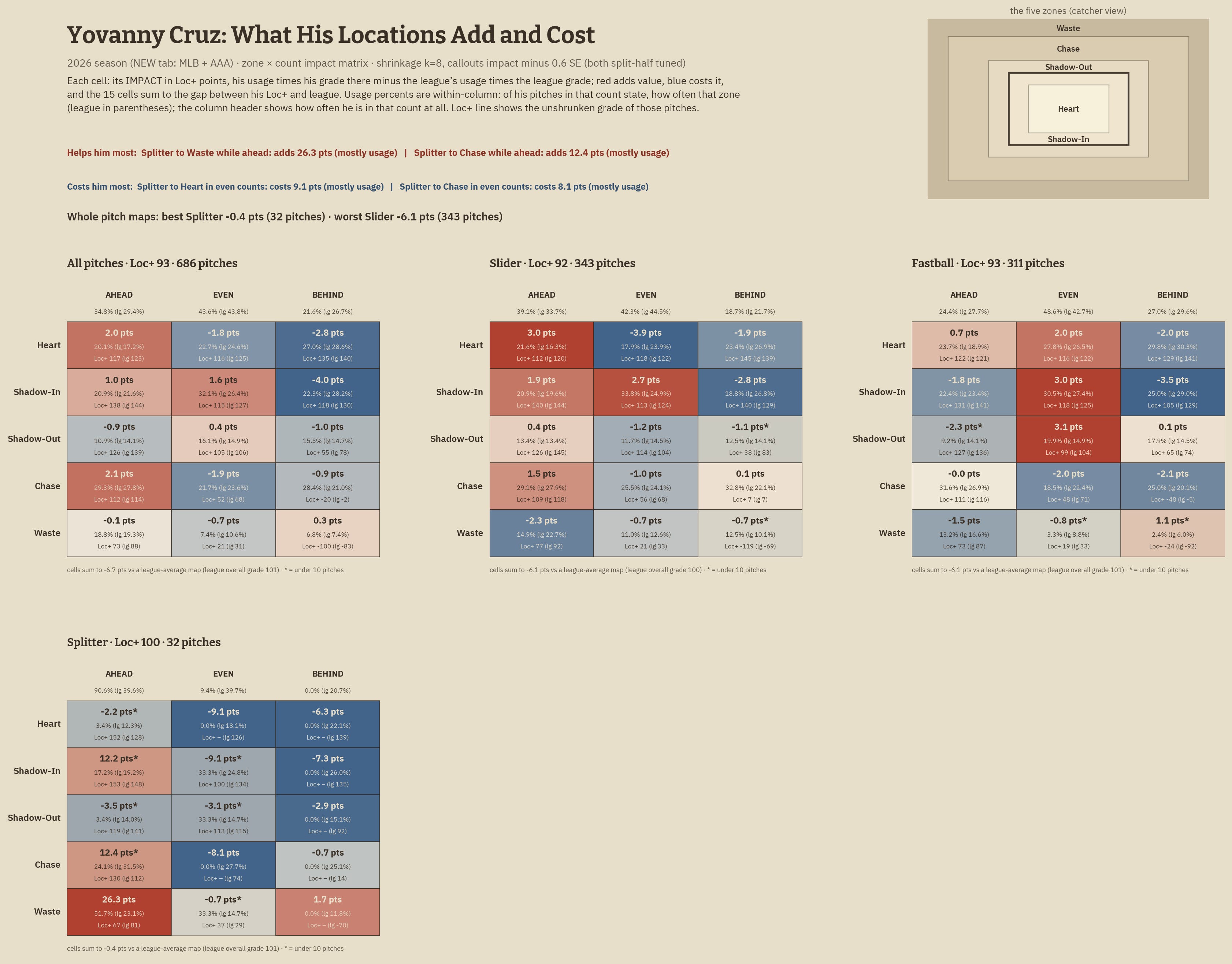
The Nationals may have finally found their closer of the future. Since debuting in pro ball in 2017, Yovanny Cruz has played in five different organizations. The Nationals, who acquired him as part of the Luis García Jr. trade, will be the first to give him an extended look at the major league level. Cruz has elite stuff (120 Stuff+), but his fastball has been hit hard to the tune of a .473 xwOBAcon. Like Perales, Cruz has a secondary pitch that is his most effective offering. In Cruz’s case, that pitch is his slider (128 Stuff+). When he locates it, it gets whiffs and ground balls at an elite rate.
Despite a solid walk rate of 8%, Cruz’s locations are below-average (92 Loc+). When he gets ahead, he does a good job of putting hitters away, but when he falls behind, he struggles to get back in the zone. When behind, 49% of his pitches are in-zone (league average 57%), and 28% are in the chase zone (league average 21%). Hitters are much less susceptible to chase in non-two-strike counts, rendering a pitch that could be competitive when he is even or ahead in the count more likely to be taken for a ball. If all things go right for Cruz, a comp for him is Twins reliever Jeff Hoffman. Hoffman also features a heavy fastball-slider-splitter arsenal with the slider generating whiffs and the fastball getting crushed. Cruz has the stuff to become a high-leverage reliever, but he needs the locations to follow suit.
RHRP Jake Bird
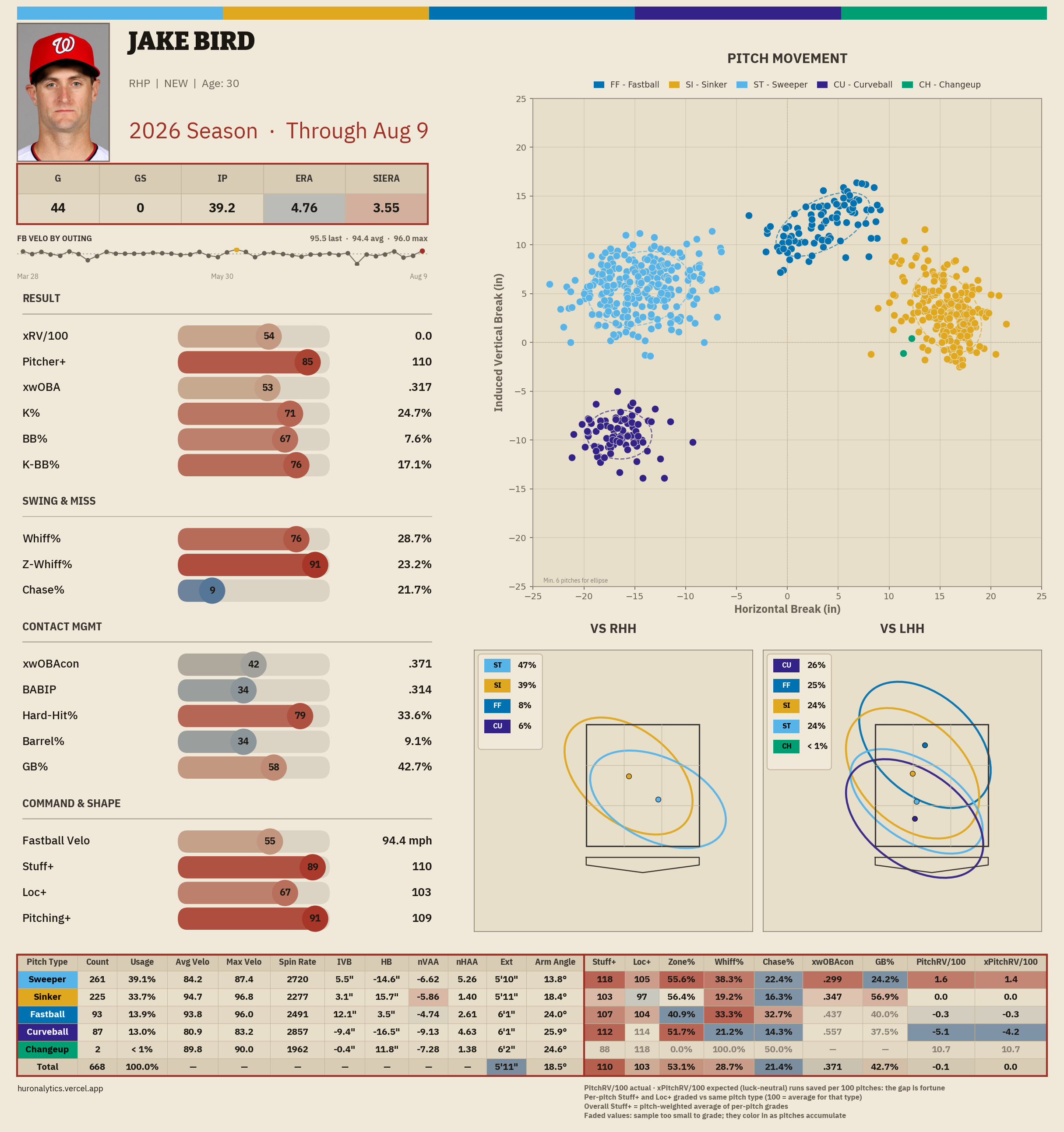
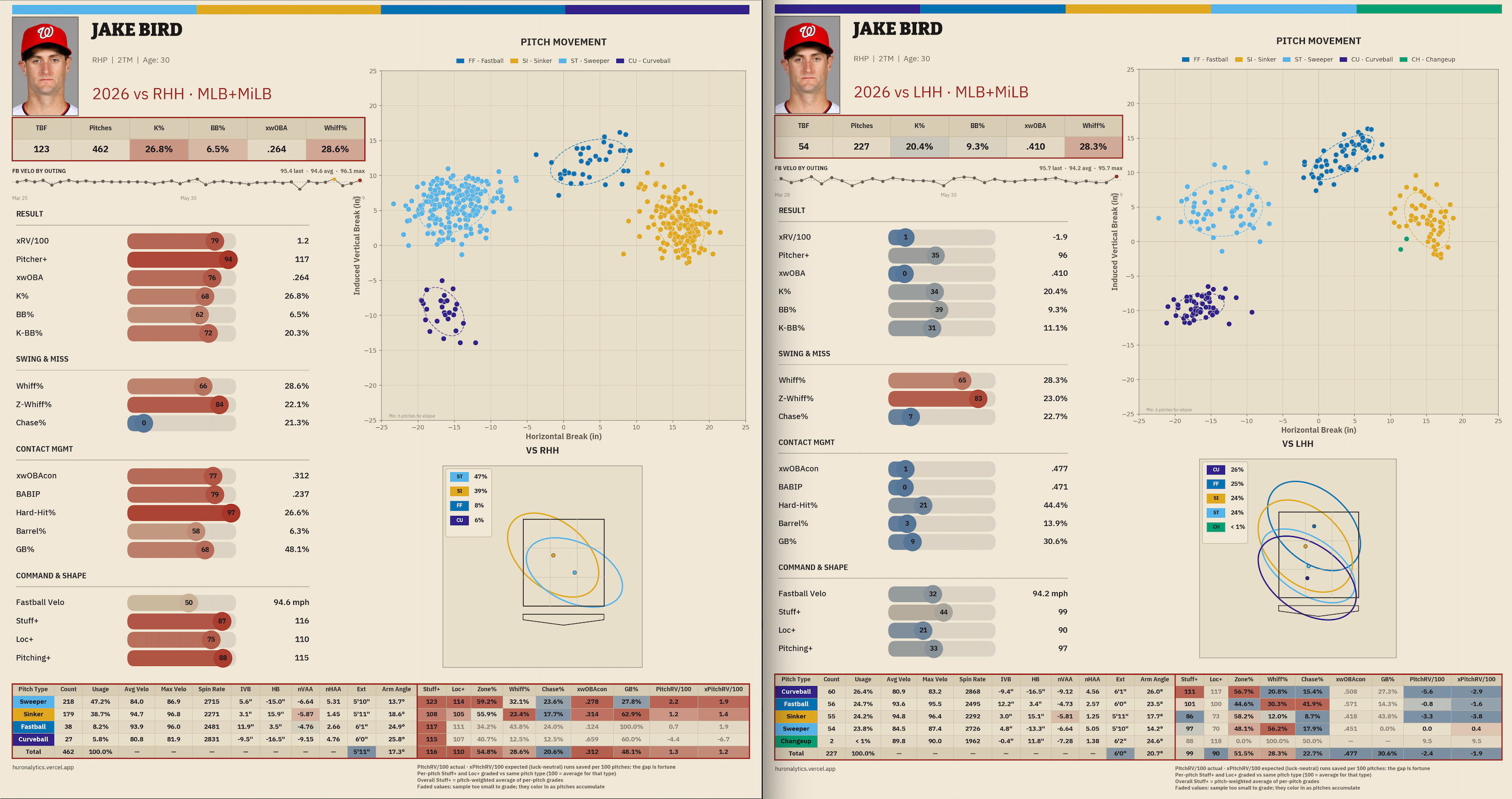
If Jake Bird only had to face right-handed hitters, he would be an above-average reliever at the major league level. Unfortunately, that is not the case, and lefties give him all sorts of trouble. Acquired alongside Cruz, Bird is a veteran who has over 250 career MLB innings with the Rockies and Yankees. Against righties, he uses a sweeper-sinker pairing that gets whiffs and prevents damage. Against lefties, he features his curveball and fastball more frequently, but still throws his sinker too often (-3.8 expected run value per 100 pitches). While the whiffs still exist, lefties have a .477 xwOBAcon against him, which is in the 1st percentile. The Nats will be tasked with figuring out how to mitigate the quality of contact against him, as Bird showed he was a competent reliever for Colorado in 2025 before being traded to New York.
The Hitters
1B/DH Abimelec Ortiz
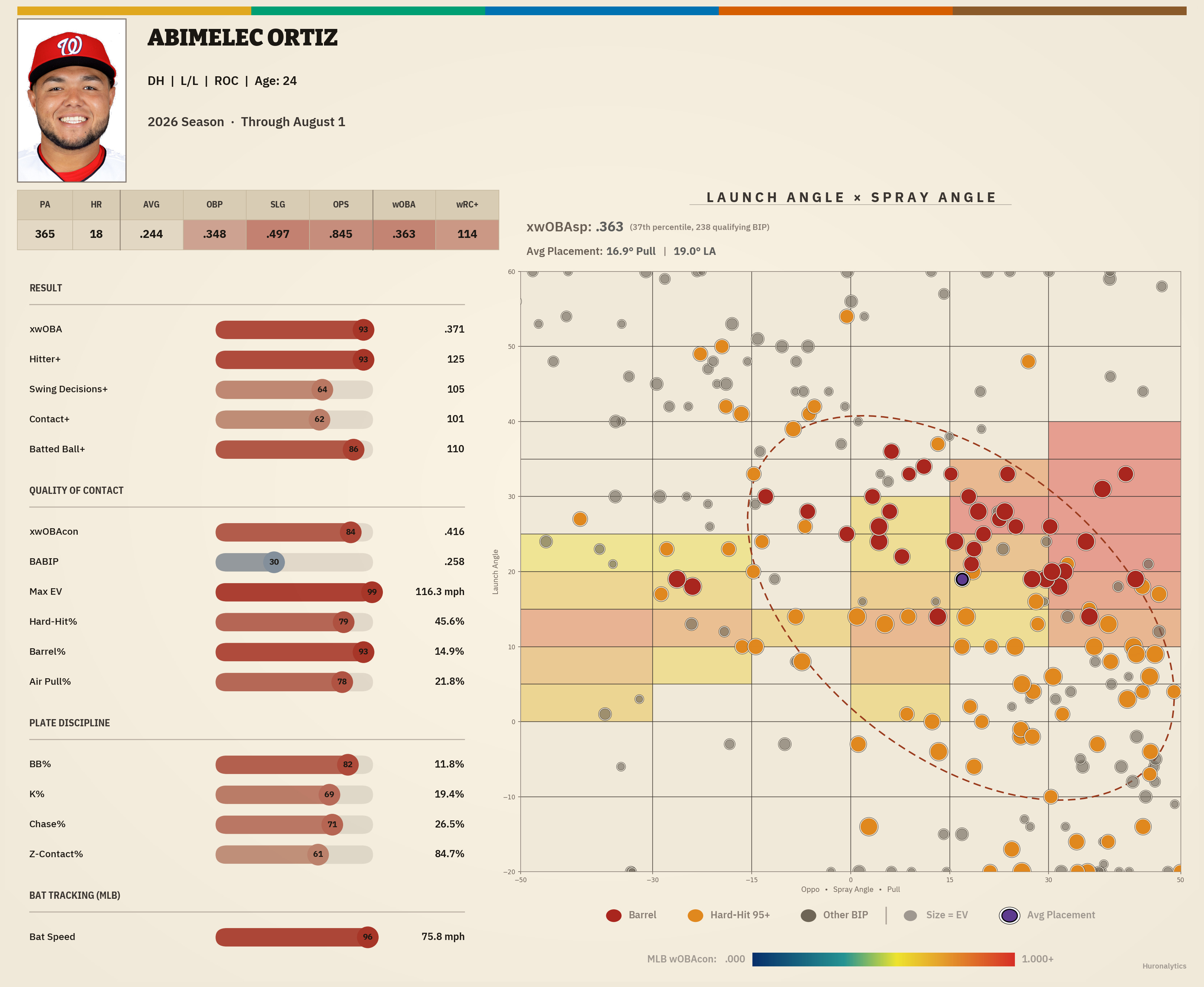
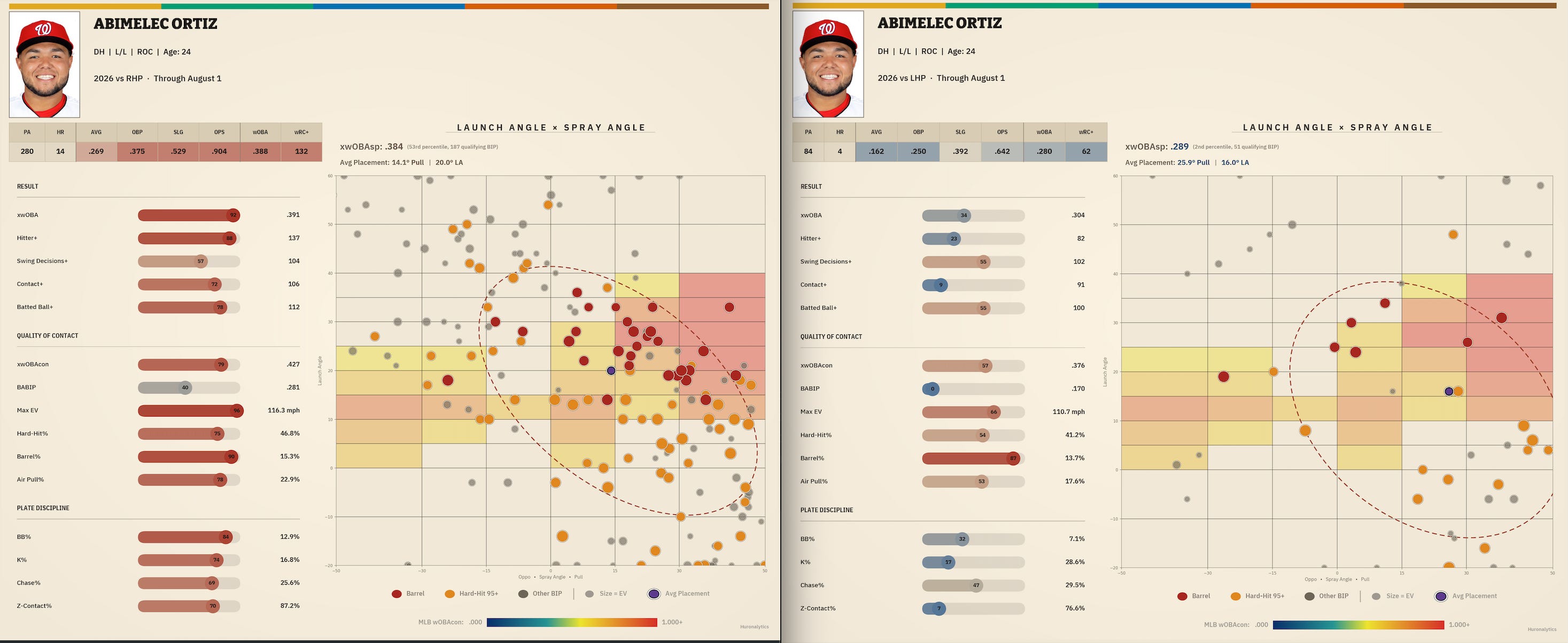
Abimelec Ortiz has a chance to make Nationals fans quickly forget the pain of trading Luis García Jr. Ortiz can flat-out rake, with his 125 Hitter+ sitting in the 93rd percentile. While he is defensively limited to first base, there are very few warts in his AAA profile. He swings at the right pitches, makes contact at an above-average rate, and destroys the ball when he makes contact. With a max exit velocity of over 116 mph, Ortiz’s raw power is rivaled by few. Combining that power with pulled fly balls has led to great expected outcomes for Ortiz. In his limited MLB at-bats he has continued to showcase the tools that got him to the big leagues. He has shown elite bat speed, albeit in a small sample, and I am all in on Ortiz being the Nats’ first baseman for years to come. His ceiling is Atlanta’s Matt Olson. While he likely will never be of the defensive caliber that Olson is, his bat can match Olson’s.
The one thing that Ortiz can improve on is his ability to hit left-handed pitching. While he still makes hard contact, his overall contact rate drops substantially. He is especially susceptible to lefty sweepers, with a whiff rate of over 50%. The Nationals’ usage of platoons could benefit him, as seen by the usage and subsequent production of Luis García Jr. before he was traded.
3B/1B Yohandy Morales
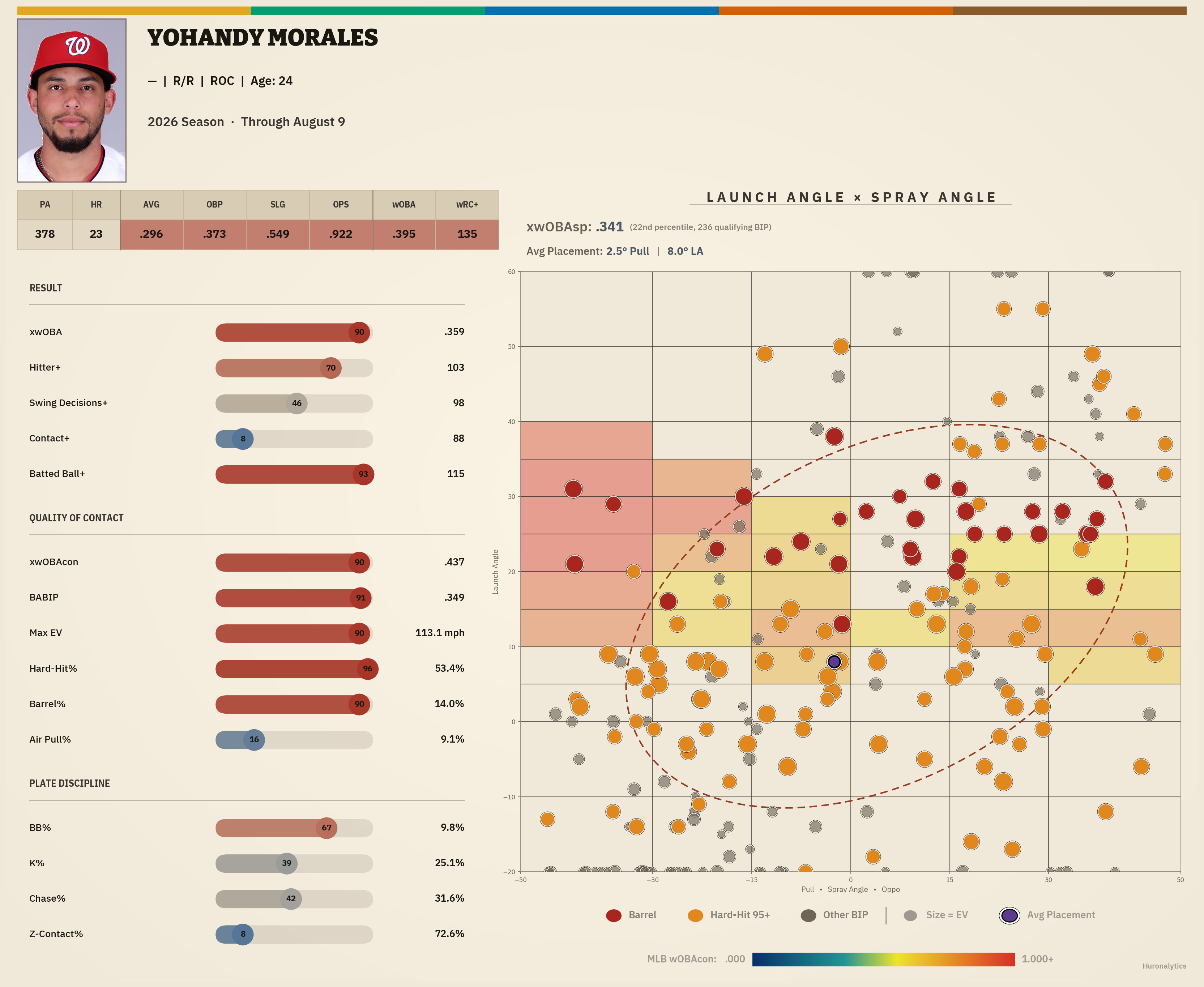
When he makes contact, balls frequently leave Yohandy Morales’ bat at high exit velocities. With 23 home runs, a Hard-Hit% in the 96th percentile, and a Barrel% in the 90th percentile, there is no doubting his power. He rarely pulls the ball in the air, which is an issue the Nats believe their player development staff can fix at the individual level. With his great surface-level stats in AAA, including a 135 wRC+, fans have been clamoring to see Morales get a chance in D.C. What more does he have to improve?
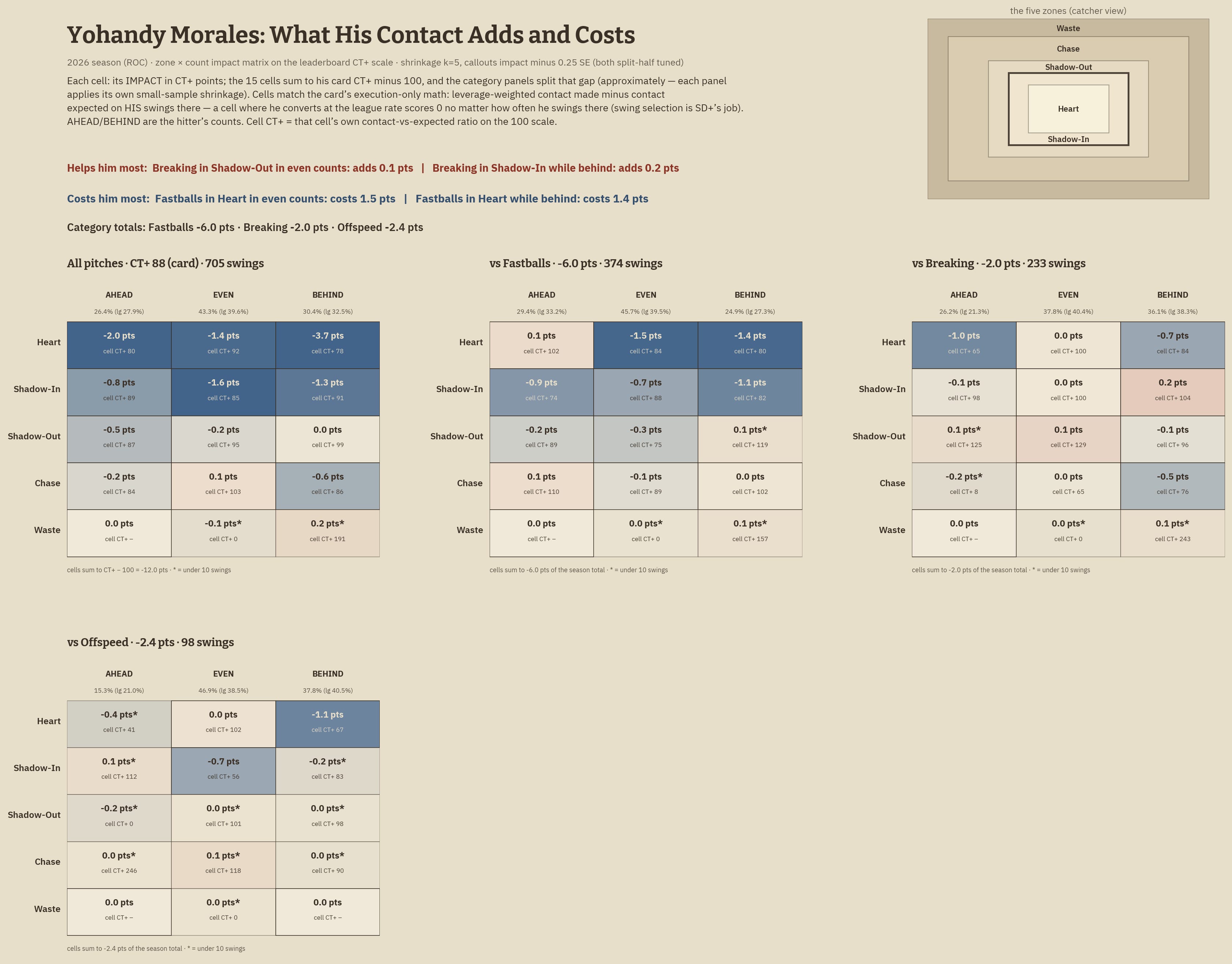
What Morales has to improve is his ability to consistently make contact. His overall swing decisions are fine (98 SD+), but when he swings at pitches in the strike zone, he is only making contact with 73% of them (8th percentile Z-Contact%). What is even more troubling is that he whiffs on nearly 30% of in-zone fastballs that he swings at. Combined with his fly ball profile skewing toward the opposite field, it may be that Morales has a timing issue and/or a long swing. While Morales may ultimately end up being an above-average major league contributor, it is understandable why the Nats have continued to let him develop in AAA as he works through these issues.
OF Andrew Pinckney
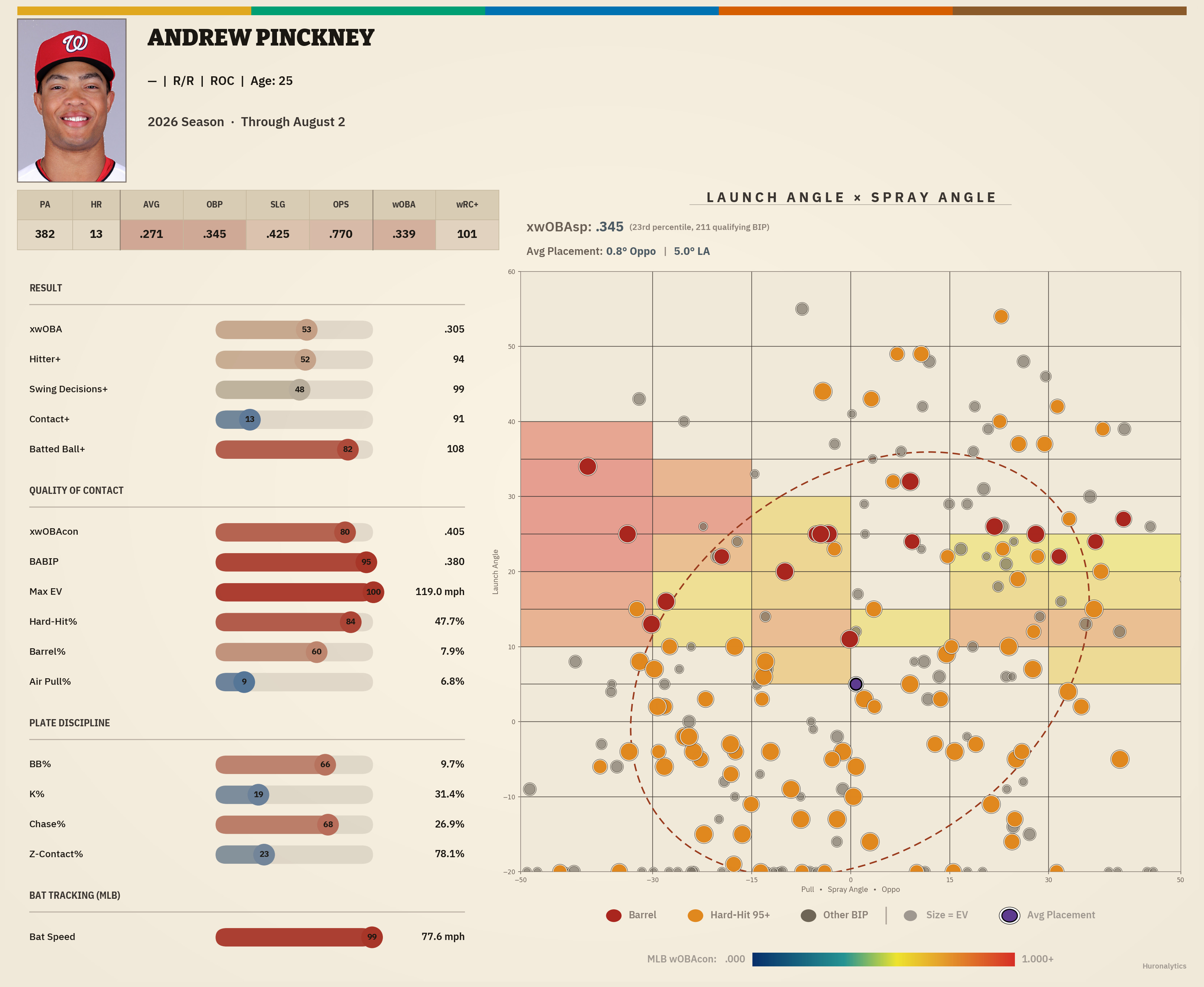
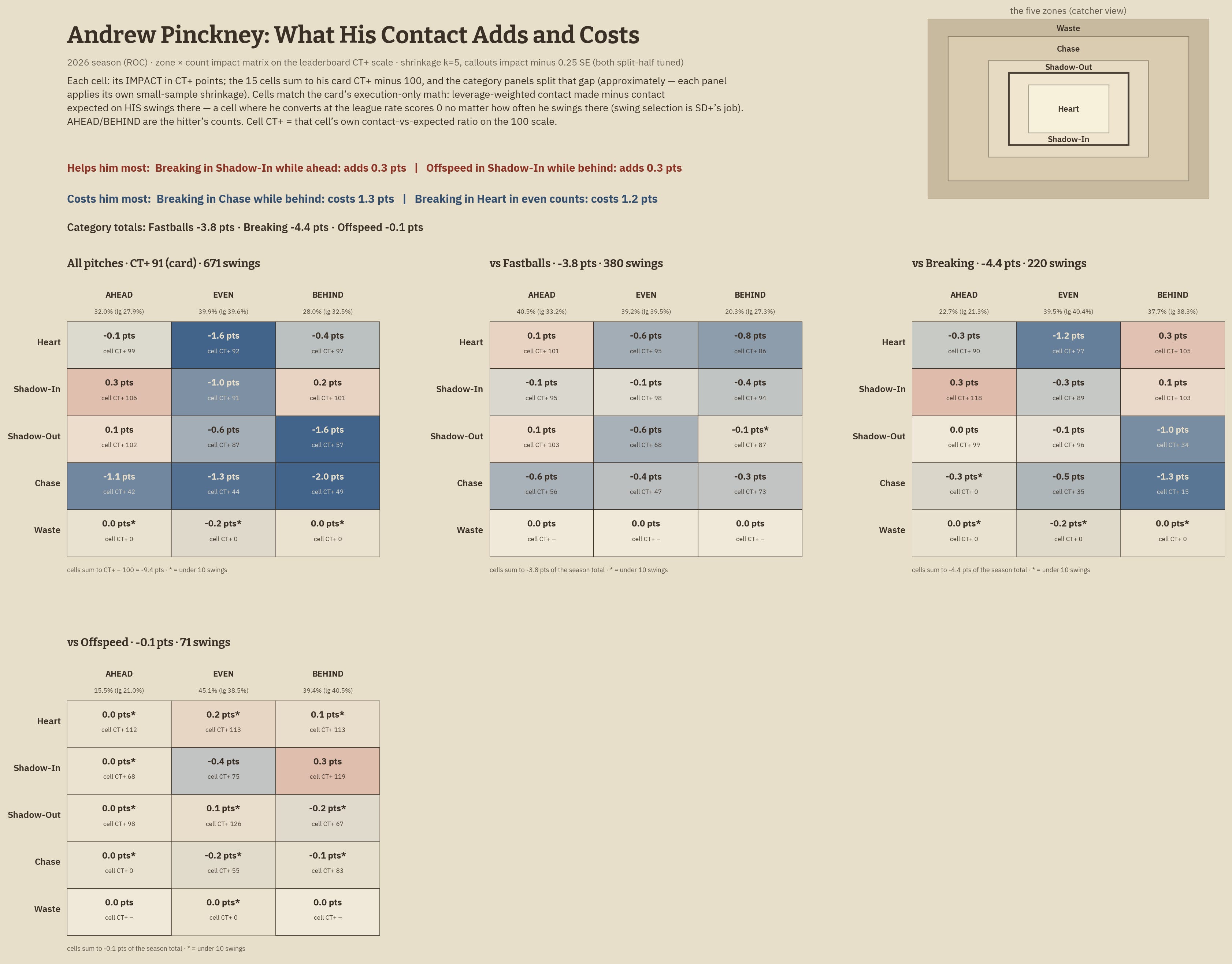
The one player to rival Abimelec Ortiz’s 99th percentile maximum exit velocity? Andrew Pinckney, come on down. In May, Pinckney hit a home run at 119 mph, which ties him with Pittsburgh’s Oneil Cruz for the hardest-hit ball in 2026. While his overall profile has plenty of room for improvement, Pinckney has shown elite bat speed (in a tiny sample), which can lead to some loud contact (108 BB+, 80th percentile xwOBAcon). However, those sounds do not occur as frequently as he or the Nats would like due to a combination of his below-average contact rate (91 CT+) and above-average ground ball rate (56%). Pinckney has the tools to be a successful MLB hitter, as shown by his home run off of Cy Young candidate Cristopher Sánchez in his full debut last week, but his inconsistency at the plate (31% strikeout rate) has him grade out closer to a league-average AAA hitter so far (101 wRC+) as opposed to a good one.
INF Seaver King
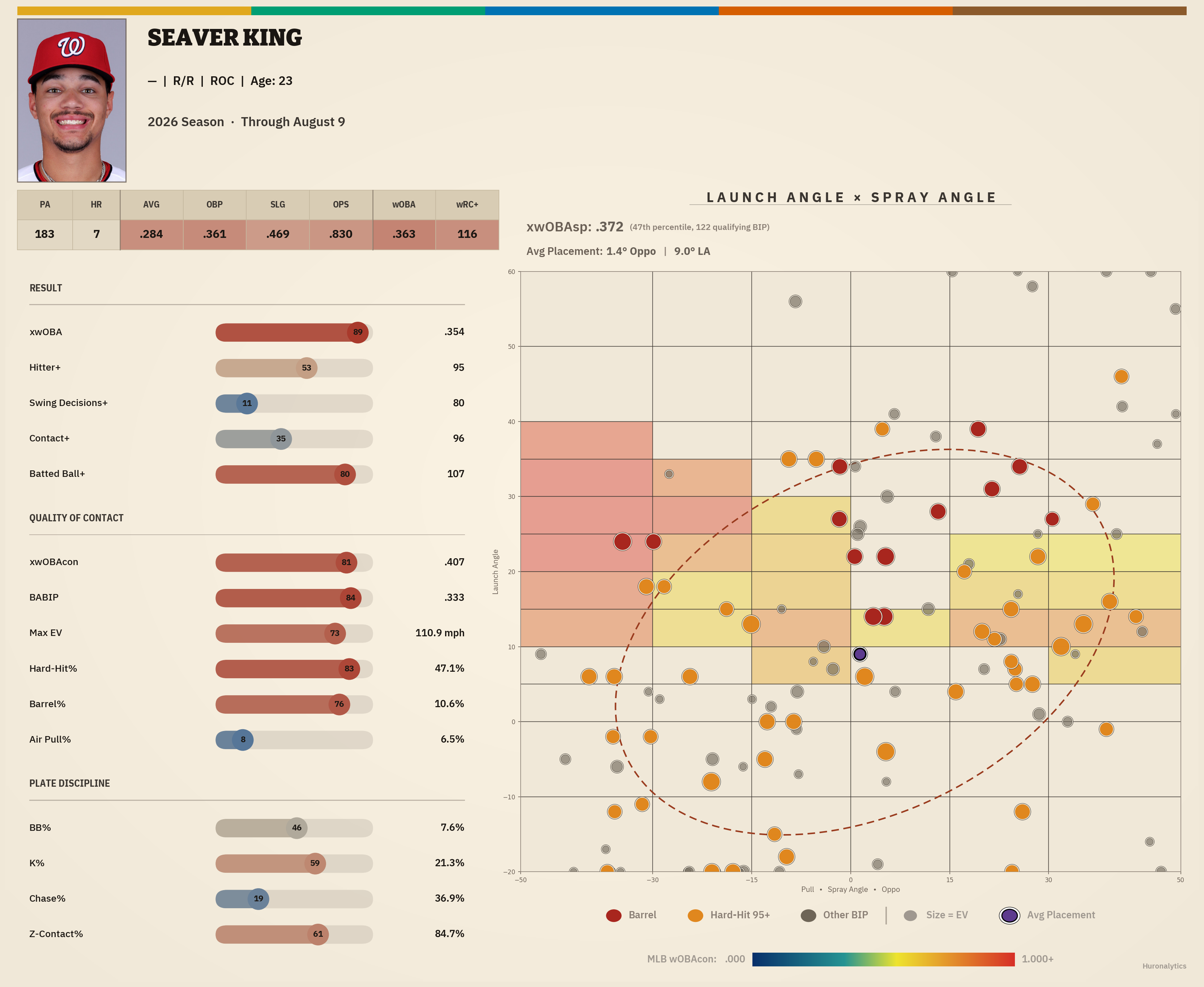
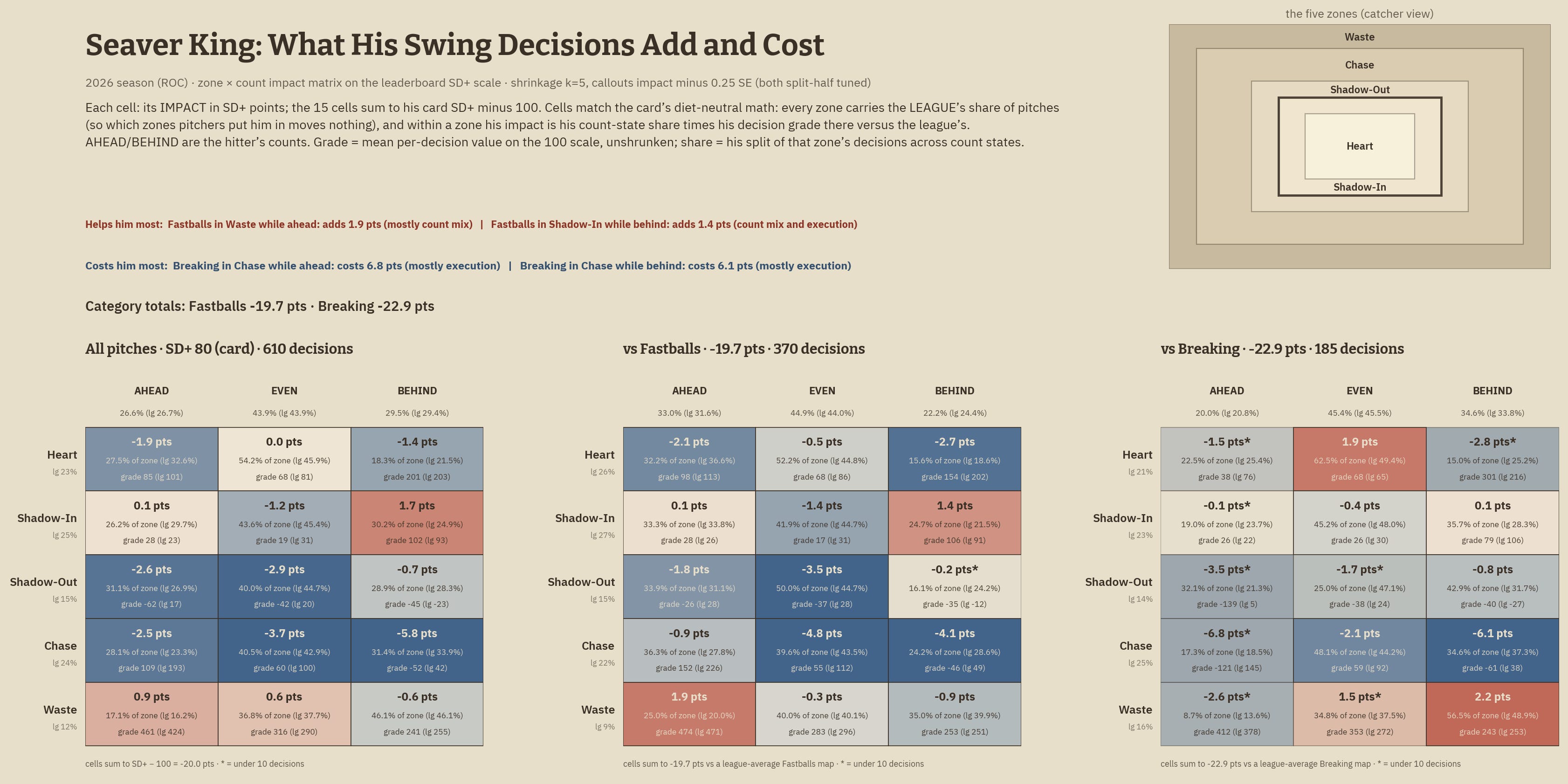
A recurring theme is emerging. Seaver King hits the ball hard but has flaws elsewhere in his profile. For King, this is his chase rate (37%, 19th percentile). He makes above-average contact on his in-zone swings, which is an improvement from Morales and Pinckney, but unlike the other two, who chase at an average to below-average rate, King expands the zone far too often. His swing decisions grade out 20 points below an average MLB hitter, and over half of that deficit sits in the chase row. Getting into good counts has not been the problem; giving them away has. Like Morales and Pinckney, he also struggles to pull the ball in the air. The hard contact is real, with a Hard-Hit% in the 84th percentile, and it is the reason he has still produced (116 wRC+) despite the poor swing decisions. If he were called up right now, he would likely be overmatched by superior MLB arms. If he can improve his chase rate, King could be an impact player in 2027 and beyond.
2B/UTIL Phillip Glasser
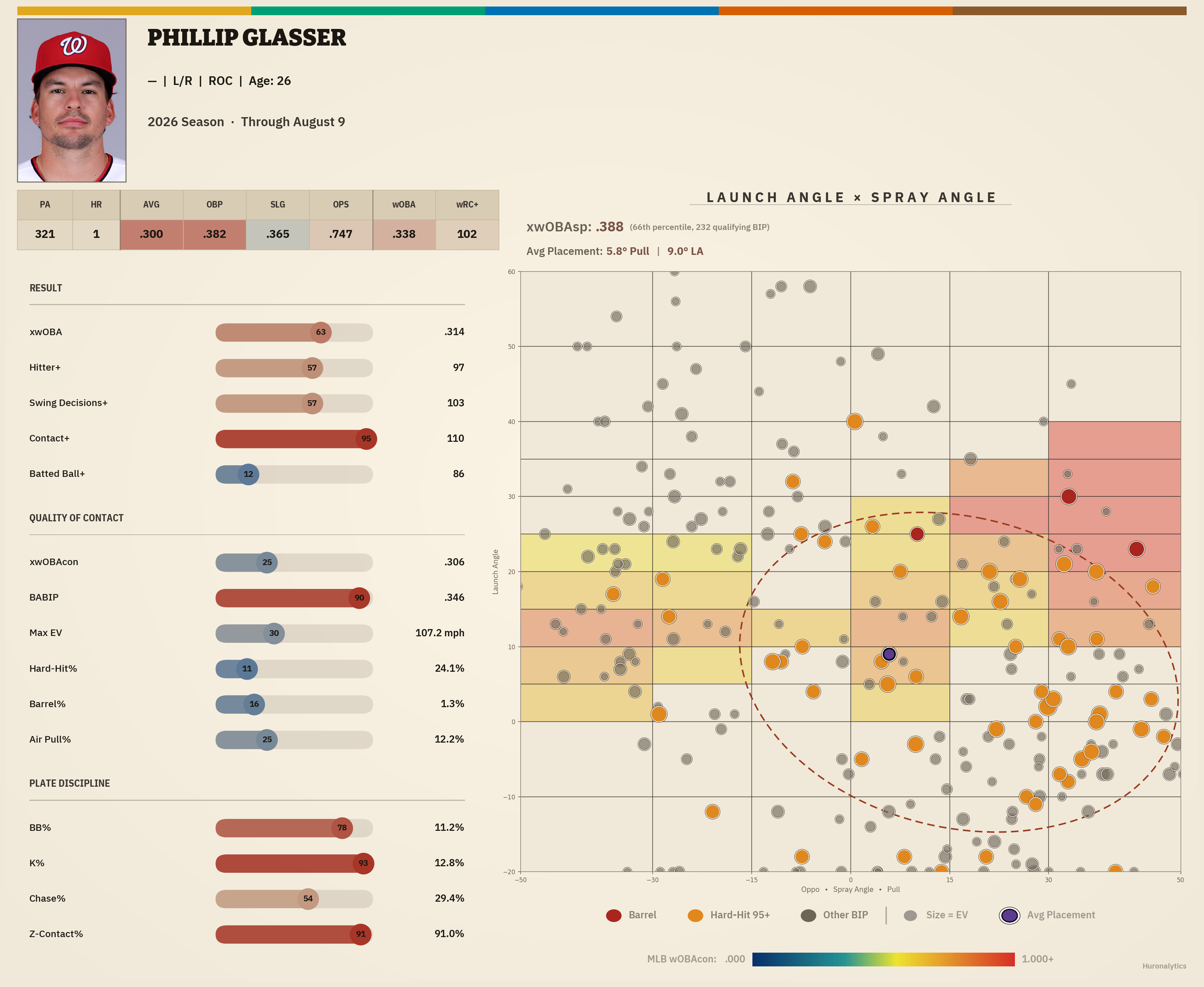
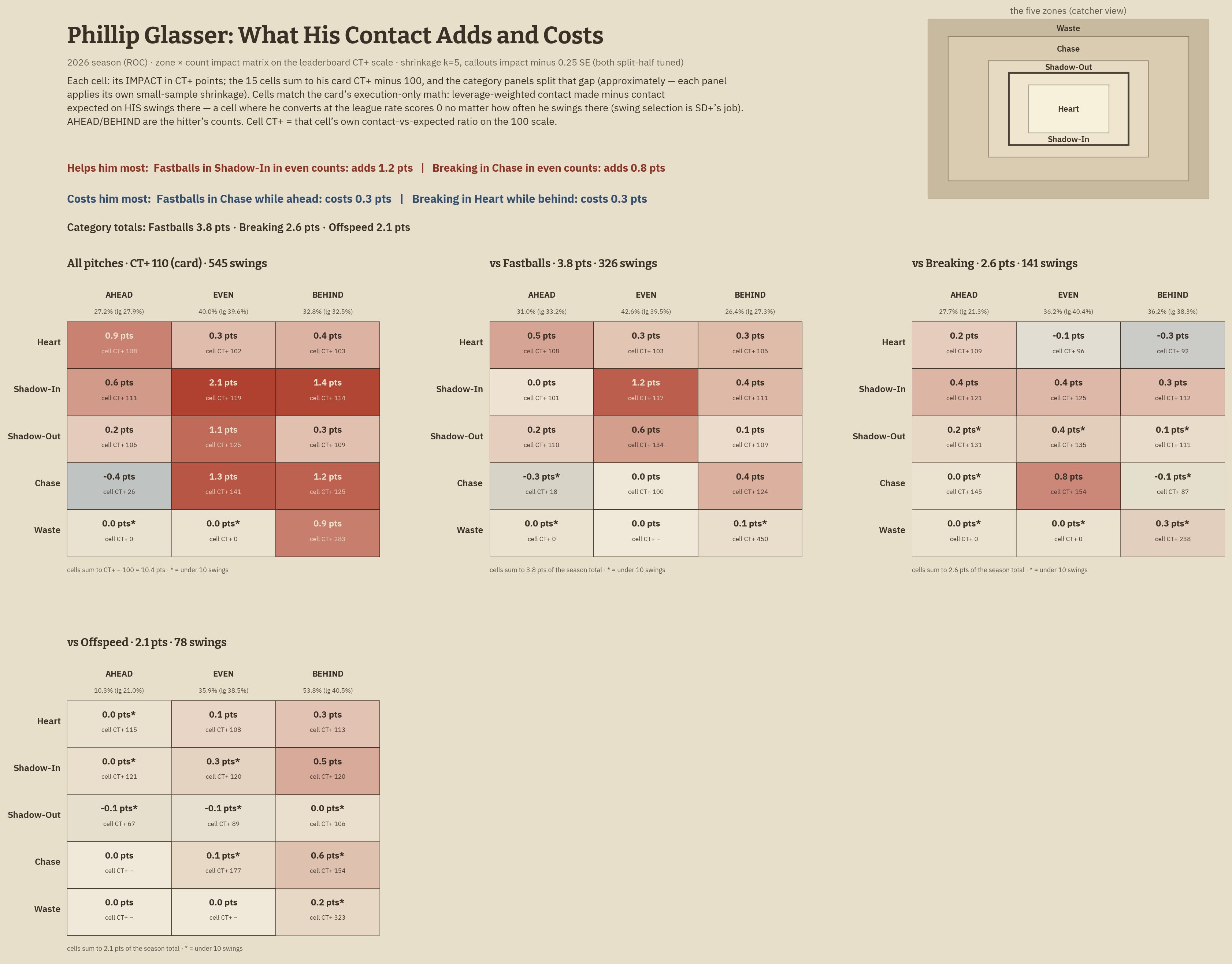
Unlike the last three hitters, Glasser has no issues making contact. His main issue is doing damage. A .300 batting average in 2026 is impressive, but a 24% Hard-Hit rate and only one home run are worrying. Glasser’s offensive profile is similar to that of Detroit’s Zach McKinstry, who is currently sporting an 80 wRC+ in the big leagues. Without bat speed data in AAA, it is impossible to say for certain, but it would not be a surprise if Glasser’s is below average. Sacrificing some contact ability for increased damage would improve his future outlook, as right now he profiles as a AAAA player. Making it to the big leagues at all is an achievement in itself, and Glasser should get there, but if the power never comes, he might not stick around.
The Future Is Now
While Rochester is not currently full of impact players for future Nationals teams, there are absolutely arms and bats who can help. Some may be just a tweak or two away from unlocking potential, and the new Nationals regime has already shown it is capable of doing so. With the three new arms acquired via trade already in the major league bullpen, Jackson Kent set to make his Nationals debut this week, and Ortiz and Pinckney getting their first tastes of the big leagues, the future is becoming the present. The next contending Nationals team already has some of its building blocks in place, but plenty of spots remain open, and the final two months of the season could serve as an audition for the names above to claim one.
Data courtesy of MLB, FanGraphs, and my website (huronalytics.vercel.app).
This is super cool. I’ve been excited about Morales since they drafted him so its nice to see someone else has been thinking about him too.